Links
Issue 004 — July 13, 2026
At What Point Do You Move On From a Place?
Home was never really the geography.
Most of my friends went to school in-state. UNC, NC State, Duke down the road. Or if they did go out of state, it would be to schools that weren't really that far away — Georgia Tech, Carnegie Mellon, Johns Hopkins, Purdue, UIUC, etc. They can be home in an hour if they want. Weekend trips are normal. The distance never really breaks.
I went home three times this past year. Everything else was California. SF, Berkeley, Sacramento, LA, whatever. And this fall, taking a gap semester to keep working in the Bay, it's going to be the same. I don't know when I'll be in North Carolina again after that.
That's a different kind of distance than my friends understand. It's not about missing home. It's about home slowly stopping being the place you return to and becoming the place you visit.
Thanksgiving was the moment this became real to me. Three months away, the longest I'd ever been gone. Distance for my friends means a half-hour drive. For me it meant a semester.
We still got along when I saw them. And when I met others. But something was off. I could feel myself working to close a gap that used to not exist. Not because anyone did anything wrong. Just because three months is nothing when you're an hour away and everything when you're on the other side of the country.
I never turned down an invitation. But I also wasn't a priority anymore, and that's not a complaint, it's just math. They don't know my schedule. I don't know theirs. The connection that used to be automatic is now something closer to 50/50, and neither side is wrong for that.
I — The Loneliness Nobody Warns You About
Everything Is Different
There's a specific kind of quiet that hits when you're actually home. You can't go out the way you used to. Your group has scattered, the routines are gone, the spontaneity that used to define being there just doesn't exist anymore. It's not a burden. It's just different, and nobody prepares you for how strange that difference feels. This applies to even things like going out, spending time with family, etc.
For a long time I fought it. I'd cram in mall trips, downtown Raleigh errands, one more coffee with one more person I hadn't seen in eight months. Packing a schedule over a long weekend just because I thought it was making the most of an opportunity. Trying to make four days feel like the version of home I remembered.
What replaced the old ritual wasn't a new version of connection. It was learning to be alone without treating it as failure. Some evenings during that trip I just sat in the house by myself, did things alone, or simply found new solace. The weird thing is, it didn't feel like loss. It felt like the most honest thing I could do with the time.
II — A Different Kind of Destination
Permission to Let Go
Here's the reframe that changed how I think about this: North Carolina isn't obligated to be treated differently than any other place I visit. I don't feel pressure to see fifteen people and run every errand when I fly to Dallas or Miami or New York for a weekend. I just go, I do what makes sense, and I leave rather than trying to force things that aren't really in my control.
Home deserves the same permission. Not because it matters less. Because clinging to the old version of accessibility, where every friend is one text away and every plan comes together easily, only sets you up for disappointment when reality doesn't match memory.
This isn't unique to leaving North Carolina specifically. If I'd transferred from Berkeley to an east coast school, the same thing would happen with a different set of people. Distance does this regardless of geography. Isolation, whether that's through time difference, travel, or a different style of living, really takes a toll no matter where you go. Everyone forms new relationships wherever they land, and the old ones don't disappear, they just become seasonal. Holidays. Maybe a wedding. That's not tragic. It's just what happens when people build separate lives.
III — Maturing About a Place
When Damage Is Already Done
I don't think this is about outgrowing North Carolina. I think it's about maturing about it. Understanding that home was never really the geography. It was a specific configuration of people, routines, and proximity that doesn't survive distance, no matter how much you want it to. I'd say the damage has already been done — even if I moved back for good tomorrow, the same people I grew up with over the past decade in this town are going to mean something different. And that's life. You have to be able to live with that.
I don't see myself living in Raleigh again. After graduation it'll probably be San Francisco, or somewhere overseas, or another city that isn't this one. My friends who stayed in-state still have something I don't, the familiarity of proximity, the ability to come home on a random Tuesday. They haven't had to reckon with this yet. But eventually, if they leave too, even a few years later, they'll understand exactly what I'm describing now.
As I go back and forth the few more times this summer, I'll cherish the memories I had in this place growing up, but also keep my eyes on the present. Not performing the version of home I remember. Not treating every visit like a mission to preserve something that's already changed shape.
I still don't know exactly when this stops feeling like a loss and starts feeling like just how things are now. Maybe it already has and I haven't caught up to it yet.
What I do know is that the peace isn't in fixing the distance. It's in sitting inside it without flinching. Some things you don't get back, and the work isn't pretending otherwise. It's learning to be at home in yourself even when the place you grew up in no longer needs you the way it used to.
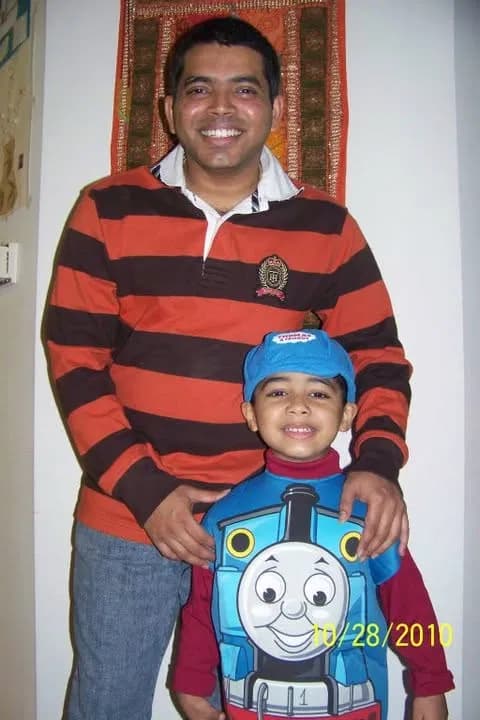
Halloween 2010. First one on record.
— Vaibhav Hariram